No Image

Analyses of the economic policy changes in Cuba

20th September 2010 Socialist Action 0

By Brian George

i'm away for a while
Photo: consumerfriendly

A great deal of media publicity has been given to the news that Cuba is to reduce state sector employment by half a million and transfer these workers to the non-state, including private, sectors. The eventual aim is to transfer about one million of Cuba’s state workers to the non-state sector.

No Image

Analyses of the economic policy changes in Cuba

20th September 2010 Socialist Action 0

By Brian George

i'm away for a while
Photo: consumerfriendly

A great deal of media publicity has been given to the news that Cuba is to reduce state sector employment by half a million and transfer these workers to the non-state, including private, sectors. The eventual aim is to transfer about one million of Cuba’s state workers to the non-state sector.

No Image

The Israeli-Palestinian Authority talks

20th September 2010 Socialist Action 0

 By Andrew Williams

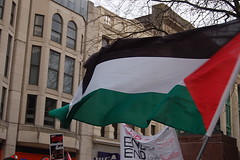
Freedom For Palestine

Photo: Walt Jabsco

The direct negotiations between Israel and the Palestinian Authority (PA) that began in early September will go nowhere. Presented by the US as negotiations to create a Palestinian state, in fact the objectives of the US and other participants are not this at all. For the US and Israel the current framework of talks allows them to set an agenda that reinforces the occupation – as happened in the Oslo talks (1992-3) and subsequent negotiation processes – simultaneously settlements expand, more Palestinians are displaced, and Israeli missiles are fired on Gaza, whilst Palestinians are told they must not resist. The objectives are to weaken Palestinian resolve, deepen the internal Palestinian divisions, enhance the US’s image in the region and rehabilitate Israel’s battered international reputation. For Fatah’s Mahmoud Abbas, Israel’s chosen negotiating partner, it is hoped the international stage can bolster his reduced standing. Amongst Palestinians there is widespread understanding of, and consequently little support for, this framework.

No Image

The Israeli-Palestinian Authority talks

20th September 2010 Socialist Action 0

 By Andrew Williams

Freedom For Palestine

Photo: Walt Jabsco

The direct negotiations between Israel and the Palestinian Authority (PA) that began in early September will go nowhere. Presented by the US as negotiations to create a Palestinian state, in fact the objectives of the US and other participants are not this at all. For the US and Israel the current framework of talks allows them to set an agenda that reinforces the occupation – as happened in the Oslo talks (1992-3) and subsequent negotiation processes – simultaneously settlements expand, more Palestinians are displaced, and Israeli missiles are fired on Gaza, whilst Palestinians are told they must not resist. The objectives are to weaken Palestinian resolve, deepen the internal Palestinian divisions, enhance the US’s image in the region and rehabilitate Israel’s battered international reputation. For Fatah’s Mahmoud Abbas, Israel’s chosen negotiating partner, it is hoped the international stage can bolster his reduced standing. Amongst Palestinians there is widespread understanding of, and consequently little support for, this framework.

No Image

Capitalism and the rise of world poverty

13th September 2010 Socialist Action 0

First published: October/November 1998

[NB this article refers to illustrative figures which we hope to include in due course.]

It is appropriate in the year of the 150th anniversary of the Communist Manifesto to draw up the economic balance sheet of capitalism in the twentieth century. In addition to the destruction of two World Wars and numerous regional wars, the record is that economic development of a small core of imperialist states occurred at the expense of the populations of the majority of market economies falling further and further behind. The only large economies to close the gap with the major imperialist states are those where capitalism was overthrown. Where capitalism was restored that progress was reversed. With capitalism entering a new period of global turmoil, translating into impoverishment, starvation and untold misery for hundreds of millions of people, Marx and Engels’ view that the working class is the only social force which can take humanity as a whole forward retains all of its force today.

Since the mid-1970s, inequality has risen to the highest levels in history. Impoverishment, starvation, avoidable disease and death have devastated whole continents and destroyed the lives of millions of people.


No Image

Capital’s global crisis

13th September 2010 Socialist Action 0

First published: October 1998

The post-1989 triumphalism of the international imperialist system suffered two shuddering blows at the end of August. First, on the economic plane, it became clear that all of the efforts to contain the 1929-scale slump which has afflicted east Asia since last summer have failed – its fall-out is progressively extending its effects to the entire world economy. Second, the chain of the international capitalist economy broke at its weakest link – Russia – and this posed the most serious political challenge to imperialism since 1989, namely, the realistic possibility that the capitalist course imposed on that country since the end of 1991 might be over-turned. The shudder of doubt which passed through the world of capital manifested itself in stock market prices, innumerable articles on the ‘backlash against the free market’, through to the farcical powerlessness of the Clinton/Yeltsin summit.

The driving force of this crisis was the realisation that the east Asian economic crisis had not been confined to that region. But its political punch was delivered by the palpable risk that capitalism could yet be overturned in a country, Russia, whose nuclear weapons rule out the direct Western military intervention which would otherwise be used in such circumstances. The latter political reality was reinforced by the inevitability of rising social and political opposition to imperialism’s prescriptions for east Asia.