
By Mark Buckley
Andy Burnham has begun his premiership much better than Keir Starmer. But that is an incredibly low bar.
The key issue for the seventh prime minister in ten years is, can he tackle the multiple crises afflicting Britain, its economy, society and political system? The earliest indications, in terms of both the policy and personnel of the new government, are that he is very far from adopting the type of radical policies that are needed.
There is no question that cutting VAT from household energy bills, pledging to end rough sleeping and capping the cost of bus fares at £2 are all welcome measures. They are far better than Starmer’s crass cut to the winter fuel allowance, which was one of his first acts and designed to show how tough he was going to be on public spending.
The right-wing clamour against the Burnham measures (including from Starmer supporters) for being ‘unaffordable’ is ridiculous. They amount together to £1.7 billion annually, in total public spending that will climb over £1.4 trillion (a thousand billion) in the current financial year. But precisely because they are such modest commitments they will do little to alter significantly the living standards of the mass of the population.
The key issues are the strategic ones that are causing such dissatisfaction among the population and which led to Starmer’s downfall. These remain war, austerity and racism. Here the signs are not at all positive.
On Gaza, Burnham has said nothing. But it was Starmer’s complicity in the genocide, and his attempts to defend it, which were disastrous both morally and in terms of Labour’s support. On Iran, Burnham has already gone further by saying he will allow US bombers to use British airfields to attack Iran. This continues Starmer’s practical policy, although he lied about providing this support for the attacks on Iran. Burnham has also declared himself a strong supporter of Zelensky and Ukraine’s war with Russia, even though very large street protests in Ukraine are driven by the rising unpopularity of the war.
This directly impacts the question of extending Tory/Starmer austerity. Burnham has already committed to the Defence Investment Plan and its funding. The commitment is underscored by the appointment of John Healey as Chancellor. Healey resigned from his post as Defence Secretary because Starmer was struggling to meet Trump’s demands on military spending. Starmer did not lack the will to fund Trump’s war drive, but felt he could not push though the planned welfare cuts to pay for it.
Healey has repeatedly spoken about welfare cuts as his preferred method of funding, a prospect that is reinforced by the retention of Pat McFadden as Work and Pensions Secretary. Burnham’s only other option to finance a surge in military spending is increased borrowing. But that simply saddles future generations with additional debt over years to come, and inevitably shrinks the available envelope for useful public spending.
Burnham has also been explicit in his support for Shabana Mahmood’s asylum and immigration ‘reforms’, which amount to demonising both refugees and all migrants even further, withdrawing their rights, splitting up families and arbitrarily ending refugee status, while charging them for the privilege. Burnham has already voted for the Bill and his reappointment of Mahmood is meant to send a strong signal that he endorses the vile policies that are designed to chase the Reform UK vote (with Reform’s own policies). Any Prime Minister who was genuinely aiming for the sunlit uplands of general, rising prosperity would have no need of these divisive, scapegoating policies.
Further challenges lie ahead, some of them foreseeable. Some US administration officials are now talking about a 20-year war with Iran, to accompany the one already underway in Ukraine. The damage and dangers from both of these is set to be enormous. Britain is hitched to this juggernaut, wherever it leads.
Funding the war drive will also inevitably lead to even harsher austerity as Trump’s demands to reach 5 per cent of GDP for military spending require enormous sums. There is no other pot of money outside of existing public spending, or once again piling taxes on workers and the poor. The public sector pay round and the autumn budget will come around soon enough.
For years, the lie was peddled that Labour was losing its votes to Reform (rather than staying at home, or the Greens, the SNP and Plaid Cymru). After Makerfield that fiction is almost impossible to sustain. But Labour policy on immigration and asylum is stuck in that era, and will continue to deter Black, Asian and anti-racist voters.
On polling, there has been a Burnham bounce. Prior to Makerfield, Labour was trailing Reform by an average of 9.5 points in the 10 polls immediately prior to the by-election. In the 10 most recent polls, Labour is on average 3 points behind.
But Labour is still far from leading in the polls, and very far from assured of beating Reform UK in 2029. That would require a sustained rise in living standards under the new Prime Minister, and a radical change in foreign policy and in social policy, especially on immigration. But there is no sign that what is needed is what is planned.
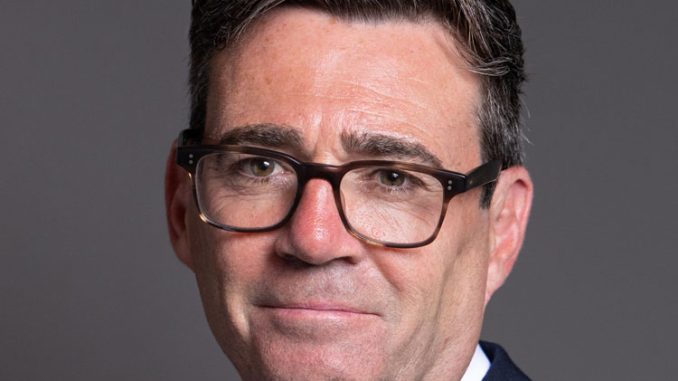
Image: Official MP portrait of Prime Minister Andy Burnham; By © House of Commons – https://members.parliament.uk/member/1427/portrait, CC BY 3.0, https://commons.wikimedia.org/w/index.php?curid=195931017; image cropped.