
By Dennis Barton and Paul Taylor
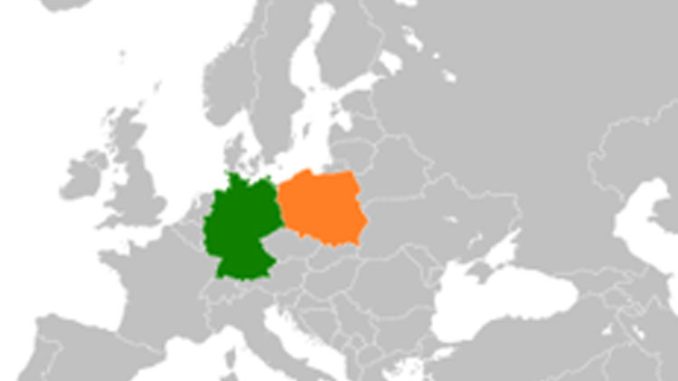
In central and eastern Europe (CEE), Germany and Poland have been extremely enthusiastic and vociferous supporters of the US war drive and the US proxy war in Ukraine. They have both announced huge military expansion goals. Germany aims to have the strongest conventional army in Europe by 2039, increasing its service personnel from 181,000 to 460,000; whilst Poland plans to rival it, building its armed forces from the current 217,000 to 500,000 by the same date. Due to their size and proximity, both countries will continue to be major players in the ongoing war in Ukraine.
In July, the Ankara NATO conference confirmed the creation of NATO 3. European alliance members agreed to large increases in military spending to free up the United States to concentrate its resources on defeating China. This does not mean that the USA is leaving Europe, but that it is demanding that European NATO states bear the financial burden of its proxy war against Russia. The USA will maintain strategic control of NATO in Europe and continue to be the final decision taker.
A month earlier, Germany and Poland signed a military agreement in Warsaw to increase military cooperation and resolve some of the disputes between the two countries. It includes the construction of further Polish East Shield fortifications by German engineering troops. There were also agreements on Baltic Sea security on joint command infrastructure; on sea routes; military mobility and infrastructure to improve the movement of troops and equipment across borders and into the Baltic states. The agreement will see German Eurofighters deployed to northern Poland and Patriot systems in the country’s southeast. Germany plans to permanently station a brigade-sized force of about 5000 in Lithuania. Large-scale ‘Grand Eagle’ exercises are planned in Poland for November 2026.
War rhetoric
Polish and German leaders continue with warfare state rhetoric to persuade the population to prioritise military spending ahead of their living standards.
In Germany, the country’s defence minister warned that the country ‘is not ready to defend itself from the security problems that will face Europe in the future.’ Likewise, in Ankara, the German chancellor Merz said, “NATO must become more European so that it can remain transatlantic. (…) In recent years, we have done too little for our own security. We are now making up for that.” Making clear what this means in practice, Merz has also declared that: “The welfare state that we have today can no longer be financed with what we produce in the economy.”
Similar rhetoric is being used by leading Polish politicians. Speaking about the prospect of a Russian victory in Ukraine, foreign minister Radosław Sikorski recently warned that Poland would be next in Moscow’s sights, declaring that Poles would rather ‘eat grass’ than become a Russian colony. Polish politicians have protested against announcements made by the Trump administration that it would remove some troops from Poland and even suggested that those being withdrawn from Germany be moved to Poland. In response, the US reversed its announcement that it would halt a long-term deployment of troops in Poland, stating they would send an additional 5,000 soldiers to the country.
Poland
The further subordination of Germany and Poland to the USA’s global military division of labour comes with a heavy price tag.
The war in Ukraine and militarisation in Europe are disproportionately disruptive to the countries in CEE. This is particularly the case in Poland, which is the largest and most strategically important NATO country in the region. It processes most of the western military aid going into Ukraine, and around 10,000 US troops are stationed on its soil. In tandem with Germany, Poland has been granted an enhanced status in the eastern flank of NATO
Successive Polish governments have supported the US strategy in the region. At the beginning of the war, Joe Biden chose Warsaw as the place to deliver his speech supporting Ukraine. The Trump administration has also hailed Poland as “Europe’s new great power” and Washington’s “ideal ally”.
Poland has been impacted directly by the war across its border. Hundreds of thousands of refugees fled to Poland after the outbreak of hostilities. There have also been numerous occasions when missiles and drones (not always clear whose) have violated Polish airspace or landed on its territory.
The economic cost of NATO 3 to Poland and Germany
Germany and Poland’s economies are deeply intertwined. The decline of the German economy under US pressure, including the destruction of Nordstream 1 & 2 and the subsequent dependence on expensive US energy, also has negative effects on Poland. Germany remains Poland‘s most important trading partner, with bilateral trade reaching €180 billion in 2025.
The hikes in military spending are placing new burdens on both economies. Claims by governments that defence spending boosts manufacturing and overall economic investment are largely groundless
Poland has led the way in increasing its military spending, with defence expenditure estimated at approximately $38 billion for 2024–2025 and projected to total roughly $450 to $470 billion between 2025 and 2035, heavily financed by government borrowing. The country now allocates almost 5% of its GDP to the military (reaching 4.7% in 2025 and 4.8% in 2026 ), with the government proposing to reach 5% by 2035. Most of the hardware has been purchased from South Korea and the United States, reflecting a costly strategic pivot in procurement partnerships.
Germany plans to nearly double its defence spending over four years, breaking with decades of fiscal restraint to bring expenditure to levels not seen since the end of the Cold War. The country spent 2.22% of GDP in 2025, increasing to 2.69% in 2026, with targets of 3.5% by 2029 and 5% by 2035. The 2030 projection for annual defence expenditure could surge to €183.7 billion as part of a €783.8 billion commitment from 2026 to 2030, funded by plans to borrow more than €800 billion by the end of the decade.
Divisions in the Berlin-Warsaw axis
Subordination to the US also brings with it huge political contradictions. Despite the growing covergence between Poland and Germany over militarisation, the legacy of German imperialism and the horrors of Nazi Lebensraum in World War Two runs very deep in Poland.
Rivalry among Poland’s leading political parties, coupled with the build-up to the parliamentary elections scheduled for October 2027, makes cross-party unity exceedingly difficult. The new Polish-German Agreement remains only at the ministerial level and is not a formal bilateral treaty, partly due to opposition from President Karol Nawrocki. He has vowed to veto any future treaty that allows permanent German bases or combat troops in the country.
Nawrocki also said, “Poles will never forget what German boots on our soil meant.” The Law and Justice (PiS) parliamentary opposition (which has recently split) uses hostility to Germany and Poland as a stick to beat Prime Minister Tusk as pro-German. Nawrocki has also continually called for Germany to pay World War Two reparations and declared that Poland is prepared to defend its western borders. Consequently, the Tusk government is keen to avoid any appearance of being soft on or serving Berlin’s interests.
A key divide between the government and opposition concerns how to finance Poland’s rising military spending. In May 2025, the European Council approved the SAFE programme, offering member states long-term loans for defence equipment. Poland was earmarked the largest share – €44 billion of the €150 billion facility. The enabling bill narrowly passed parliament, with the right-wing opposition voting against it, arguing it would require Poland to buy more weapons from European countries such as Germany. PiS leader of the opposition, Jarosław Kaczyński, condemned the deal as a step toward “German rule” and a blow to the US alliance. President Nawrocki then vetoed the legislation, proposing instead to tap the central bank’s unrealised profits and revaluation reserves from gold and foreign currency holdings. The government vowed to proceed regardless, though now with less flexible access to the funds.
Falling support in Poland for the war in Ukraine
There has recently been a sharp decline in support for the war in Eastern Europe, including in Ukraine itself, where, by June this year, only one in four adults (24%) say Ukraine should continue fighting until it wins the war and approval for the US leadership has sunk to just 7%. In Poland, attitudes towards supporting Ukraine have also weakened.
The decision by President Zelensky to name a military unit after the Banderite Ukrainian Insurgent Army UPA and the reburial of a UPA leader have caused outrage in Poland. Poland holds the UPA responsible for the Volhynia Massacre of up to 100,000 civilians in World War Two. The Ukrainian Hall of Fame proposal last month has added to the fear that Ukraine is glorifying these massacres. In response, the Polish president revoked Zelensky’s Order of the White Eagle.
Recent controversies have significantly eroded domestic support for Poland’s stance on the Ukraine war. July polls show that 45.2% of Poles now oppose continued military aid to Kyiv, a sharp decline from the 77.5% who supported it in late 2022. Opposition is also strong on broader engagement: with over 80% of respondents against sending Polish troops to Ukraine. Also, a June poll recorded 60% opposing Ukrainian accession to the European Union.
Due to the weakness of the Polish left, opposition to the war has come from the nationalist right. Parties such as the far-right Confederation and (even further) far-right party Confederation of the Polish Crown have capitalised on the growing scepticism towards supporting Ukraine. Because this opposition is coming from the right, it has been accompanied by growing hostility towards Ukrainian refugees in Poland. For the first time since the beginning of the war, opposition to Poland taking in Ukrainian refugees outweighed support for it (52 per cent to 42 per cent). Growing hostility towards Ukrainians has been accompanied by a rise in violent attacks against them in Poland.
German divisions and opposition to militarism
In Germany, there is growing hostility to reducing welfare to pay for increased military spending. There is also increasing opposition to militarism and the German government’s policy on the war in Ukraine.
Germany’s pro-war parties are in crisis. The CDU/CSU-SPD governing coalition, which proposed massive military spending increases and unprecedented borrowing, has slumped to 36% in the polls, down from nearly 45% in the February 2025 general election. Reuters reported on July 29 a poll that showed only 15% of people are satisfied with Chancellor Merz’s performance.
German polls reflect deep divisions and dissatisfaction with the economic consequences of German support for the war in Ukraine.
Deutsche Welle reported in February that although 52% supported stronger support for Ukraine, 35% believed that Germany should stop supporting Ukraine. The same poll showed a decrease in German citizens fearing a Russian attack on NATO.
But a plurality of Germans would prefer a peaceful resolution to the conflict. RBC-Ukraine in February this year reported on a YouGov poll which showed that ‘58% of German citizens tend to or fully support holding negotiations between Merz and Putin. Meanwhile, 26% of respondents said they oppose the idea.’
A YouGov poll in February 2026 showed that 40% Germans supported ‘a negotiated peace to end the fighting, even if this means Russia still has control over some parts of Ukraine.’ Whilst 33% opposed.
Opposition to the government’s warfare policy is growing outside the coalition, though the Greens remain hawkish. Die Linke, which opposes further military aid, has risen to 12% in a July poll, up from 8.8% in 2025. The extreme right AfD now polls at 27%, compared to 20.8% previously, capitalising on opposition to the war’s economic damage, deindustrialisation, the destruction of Nord Stream 1 & 2, and the loss of cheap Russian energy.
Civic resistance to Merz’s push for a war economy is also mounting. The Guardian reported last month that young Germans are opting out of military service in rising numbers, with conscientious objector applications surging. In May, The Morning Star reported that 45,000 German schoolchildren joined walkouts and protests against conscription across over 150 towns and cities on Victory in Europe Day, demanding the repeal of the Military Service Modernisation Act, an end to stealth conscription, and a halt to military recruitment in schools.
There have been no such actions in Poland, where the government has tried to build its armed forces through developing territorial forces rather than through conscription.
Also, the demonstrations in Germany reveal how the left can increase its strength and impact by opposing the warfare state. Die Linke is benefiting from its opposition to all arms exports and Germany’s decision to pursue rearmament.
Conclusions
The US proxy war in Ukraine has outlasted the First World War, with no end in sight. Ankara confirmed what had long been signalled: Trump has leveraged the conflict to force European NATO members to shoulder the burden to defeat Russia, freeing Washington to pivot toward China. Yet for Germany and Poland, the costs are mounting.
Economically, both are committing to defence spending on a scale not seen since the end of the Cold War, financed through borrowing that will crowd out welfare and social investment. Politically, the domestic consensus is fracturing. These are not parallel crises but symptoms of a single contradiction: the attempt to build a European war machine under US control is being imposed on societies increasingly unwilling to pay its price.
The Berlin-Warsaw axis, for all its military convergence, rests on fragile foundations: opposition and divisions are growing. The left faces a dual task: to expose this subordination, and to offer an alternative framework of common European security and diplomacy over a new Cold War that neither country can afford and their populations do not want.