
By Mike Martin
About the Philippines
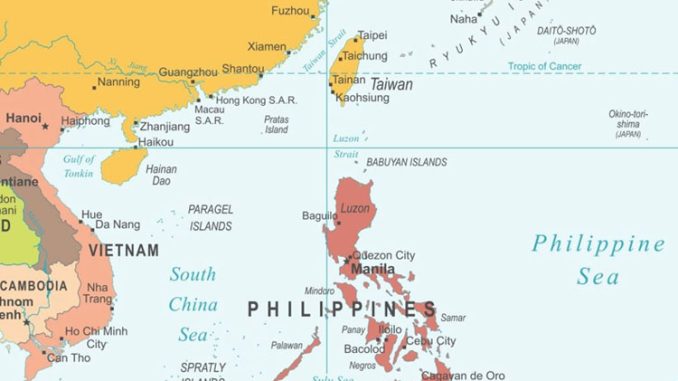
The Republic of the Philippines is an archipelagic state in Southeast Asia consisting of about 7,641 islands, with a total area of about 300,000 km2 and a population of 117.9 million. The islands are broadly categorised into three main geographical divisions, namely from north to south: Luzon, Visayas, and Mindanao. The Philippines has a rich multi-ethnic population with over 134 distinct ethnolinguistic groups who are predominantly Catholic Christian with a small minority of Muslims.
Spain colonised the Philippines for 333 years, lasting from the establishment of the first permanent Spanish settlement in 1565 until the end of Spanish rule in 1898.
The dependent relationship of the Philippines with the US began when it was ceded to the US by Spain in 1898 for a payment of $20 million after defeat in the Spanish-American War. Once the US had finally subdued the Philippine independence movement in 1901, it became its only formal colony. Thereafter the Philippine economy took on a classical colonial form becoming reliant on the export of cash crops such as hemp, sugar, tobacco and coconut as well as some base metals to the US which constituted 86 per cent of Philippine exports by 1934, with 66 per cent of its imports coming from the US. Resistance to harsh working conditions in the countryside, the Moro Rebellion (1902–1913) and pro-independence sentiment created constant problems for US rule, which was also controversial at home, and after a ten-year transition period the Philippines became independent in July 1946.
During the colonial period the US choose to preserve the power of the local landowning elite (ilustrados and hacienderos) who also populated the newly formed Congress and Senate in the post-independence Philippine government. As a result, no radical land reform took place comparable to that in the immediate post war period under US tutelage as in Taiwan, Japan and South Korea which laid the basis for their rapid industrialisation. Moreover, since the US granted the Philippines independence in July 1946 then as a sovereign nation, it managed its own domestic and financial affairs, meaning the US no longer poured direct, occupying-power reconstruction funds into the local economy.
US-Philippines trade policy was defined by the September 1946 Bell Trade Act which was widely seen as an inexcusable surrender of national sovereignty. The act was replaced by the less restrictive Laurel-Langley Agreement of 1955, which expired in July 1974.
Subsequent agreements have ensured close military cooperation between the two states:
- August 1951 Mutual Defence Treaty
- May 1999 Visiting Forces Agreement (VFA)
- April 2014 Enhanced Defense Cooperation Agreement (EDCA)
The Clark Air Base was originally established in the Pampanga province in 1903 under control of the US Army and grew into a major US air base during the Cold War serving as a launching pad for the Korean War and an important logistics hub during the Vietnam War.
The US bases became a political issue in the Philippines during the 1960s, which saw a resurgence of Filipino nationalism, especially among students. A major flashpoint were the fatal shootings by an off-duty US Airman of a 14-year-old boy in 1964 and by a US Navy Gunner of a 21-year-old Filipino labourer in Subic Naval Base in 1969 as well as thousands of recorded cases of violence against women.
The military agreements have shored up the Philippine elite during successive insurgencies and uprisings:
Major Armed Insurgencies
- Hukbalahap Rebellion (1946–1954): A communist-led peasant uprising in Central Luzon driven by agrarian unrest and rural poverty. It was largely defeated under Defense Secretary Ramon Magsaysay through military reforms and land resettlement.
- Communist Insurgency (1969–Present): Led by the Communist Party of the Philippines (CPP) and its armed wing, the New People’s Army (NPA), this protracted guerrilla war fought for a Marxist-Leninist-Maoist government has steadily diminished in size.
- Moro Conflict (1968–2019): An insurgency by Muslim independence and autonomy movements in Mindanao (such as the Moro National Liberation Front and Moro Islamic Liberation Front). It largely concluded via peace agreements and the creation of the Bangsamoro Autonomous Region in Muslim Mindanao (BARMM).
Civil and Military Uprisings
- EDSA People Power Revolution (1986): A massive, bloodless civilian and military uprising that ended the 20-year authoritarian rule of President Ferdinand Marcos and forced his family into exile. EDSA stands for Epifanio de los Santos Avenue, a major thoroughfare in Metro Manila, Philippines, where the peaceful mass protests took place.
- EDSA II (2001): A four-day popular protest movement that unseated President Joseph Estrada amid corruption allegations.
- Post-1986 Coup Attempts: A series of violent military coup d’état attempts staged by the Reform the Armed Forces Movement comprising rebel factions of the Armed Forces of the Philippines (AFP) against the government of President Corazon Aquino between 1986 and 1992.
The US-Filipino relationship is framed by the overarching imperative of the US to maintain its global hegemony and the dependency of the Filipino elite under pressure from multiple internal oppositions deriving from the country’s underdevelopment.
Fissiparous politics
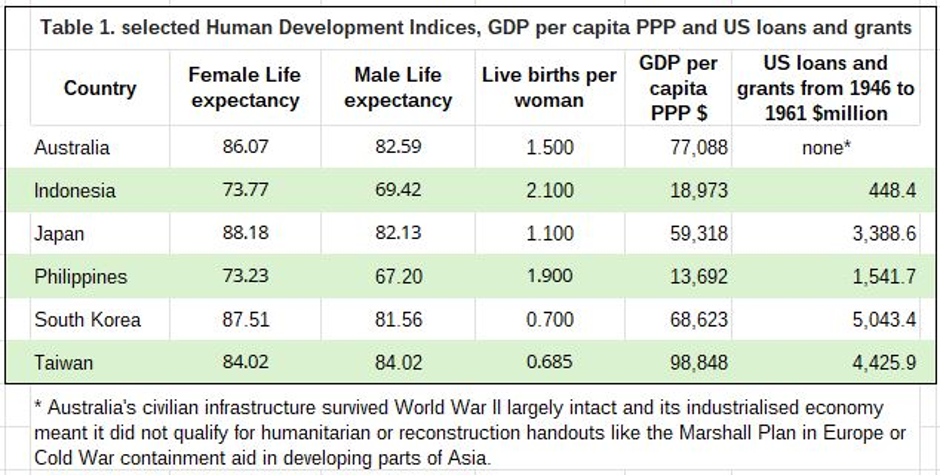
The Philippines is an archetypical underdeveloped state where the so-called bourgeois-democratic tasks[i]are incomplete. Thus, the combination of semi-feudal land ownership, scarcity of investment capital and absence of state driven industrialisation in the post Second World War period translates today into poverty and low life expectancy compared to its East Asian peers as illustrated in Table 1 below.
Philippine politics are prone to fracturing, splitting, and intense factionalism primarily because they are built around fluid personal alliances and powerful family dynasties rather than cohesive ideological political parties. Often parties lack distinct platforms or policy differences, instead voters and politicians rally around individual personalities and charismatic figures rather than party manifestos. As a result, parties routinely rise, transform, or entirely collapse based solely on the political fortunes of their leaders.
Constitutionally the Philippine president wields immense control over the national budget and government funds. To secure these resources, lawmakers regularly switch parties to join the newly elected president’s alliance. This dynamic, known locally as “political butterflying,” strips opposition parties of power overnight thus embrittling opposition coalitions.
Power is overwhelmingly concentrated within wealthy, regional family dynasties such as the Marcoses, Dutertes, Cayetanos, and Villars who control around 70 percent of the current Congress. Thus, national alliances are almost always marriages of convenience between these powerful families and because these clans prioritize their own survival, businesses, and protection from accountability, their alliances frequently collapse into fractious, highly publicised feuds – vividly illustrated by the rupture of the Marcos-Duterte “Unity Team”.
Instead of functioning as stable, principle-driven organisations, Philippine political parties act as temporary, convenient vehicles used by the elite to secure power and state resources. Once an election ends or the presidency shifts, these fragile coalitions rapidly fracture and realign. Despite this, turnouts since 1986 at presidential elections are high varying from 74.8 percent to 82.98 percent with midterms about 5 percent lower.
Trade unions in the Philippines do not formally affiliate with traditional political parties, but many maintain close ideological or tactical relationships with specific political movements. Philippine labor laws do not require or structurally institutionalise union-to-party affiliations. Most trade unions operate independently as workplace bargaining agents or federations; however, unions often engage in politics through the country’s party-list system, endorsing candidates, or joining multi-sectoral coalitions.
Contributing to the above is a flawed institutional design whereby the 1987 Philippine Constitution restricts the president to a single, six-year term. This structurally guarantees that every leader eventually becomes a lame duck, causing their administration’s coalition to splinter ahead of the next election cycle as factions scramble to position new successors. Moreover, the president and vice president are elected independently, frequently resulting in leaders from opposing, rival factions occupying the nation’s top two offices.
Finally, government funding is heavily transactional. Access to public funds is tied to political loyalty rather than systemic national planning, forcing a highly fragmented, competitive environment where politicians fight for individual patronage packages.
The baleful presidency of Ferdinand Marcos Sr.
Marcos Sr. served as the 10th president from December 1965 to February 1986. From 1972 to 1981, Marcos ruled the Philippines under martial law, embracing a policy of “constitutional authoritarianism” notionally in response to the “communist threat” posed by the newly founded Communist Party of the Philippines (CPP), and the 1968 “rebellion” of the Muslim Independence Movement (MIM). During this period historians believe that the Marcos dictatorship was marked by 3,257 known extrajudicial killings, 35,000 documented tortures, 737 enforced disappearances, and 70,000 incarcerations.
Following the lifting of martial law in 1981, a wide-ranging economic crisis and the assassination of Ninoy Aquino, a former Philippine senator, on 21 August 1983, Marcos was deposed in late February 1986 by the People Power Revolution. Also known as the February Revolution, it saw a series of mass demonstrations across the Philippines and a sustained campaign of civil resistance against regime violence and electoral fraud.
Corazon Aquino, the “Mother of Democracy”
Marcos was succeeded as president by Aquino’s widow, Corazon Aquino, who was the most prominent figure of the revolution and served as the 11th president from February 1986 to June 1992 on a turnout of 78.8 percent. Aquino oversaw the creation and ratification of the 1987 Philippine Constitution, which established the Fifth Philippine Republic and restored the bicameral Congress.
The return of party democracy and government reforms beginning in 1986 were hampered by national debt, government corruption, coup attempts, disasters, a persistent communist insurgency, and an ongoing military conflict with Moro separatists in the Mindanao region in southern Philippines.
In June 1988 Aquino enacted the Comprehensive Agrarian Reform Program (CARP), as part of the long history of attempts of land reform in the Philippines.
During Aquino’s administration, US forces withdrew from the Philippines, due to the rejection of the US Bases Extension Treaty, and leading to the official transfer to the government of Clark Air Base in November 1991 and Subic Bay in November 1992.
Benigno Aquino III KGCR, the son of Ninoy and Corazon Aquino, served as the 15th president from June 2010 to June 2016 on a turnout of 74.34%.
The US Pivot to Asia
During a speech in November 2010 to the Australian Parliament, President Obama announced the ‘pivot to Asia’ which situated the existing treaty allies of the US, especially the Philippines, at its core.
The following year the Manila Declaration, was symbolically signed aboard the nuclear capable guided-missile destroyer USS Fitzgerald in Manila Bay. The Declaration is a statement of economic and military collaboration which reinforced the US–Philippines Mutual Defence Treaty on its 60th anniversary.
While its neighbours tried to keep the peace in the region, the government enthusiastically threw itself behind Obama’s new agenda in Asia, abrasively taking the offensive against China in the South China Sea.
Following the signing of the EDCA, the US military returned on a rotational, joint-use basis. This agreement granted US forces access to designated Philippine military locations rather than establishing sovereign US bases.
In June 2015 Aquino went so far as to claim that China was behaving like Nazi Germany in 1938 when it seized the Sudetenland from Czechoslovakia.
Duterte and an unexpectedly sharp shift in foreign policy
Rodrigo Duterte KGCR was elected as the 16th president in June 2016 on a turnout of 80.69 percent, pledging an independent foreign policy and strong law and order measures including a “war on drugs”. On coming into office Duterte parked the 2016 Permanent Court of Arbitration ruling that favoured the Philippines over Beijing’s maritime claims in the South China Sea, choosing instead to pursue bilateral economic cooperation, loans, and infrastructure investments. He also threatened to end military agreements with the US during his term, and even formally initiated the termination of the VFA before ultimately reversing the decision.
Duterte’s war on drugs differed from previous administrations through its explicit state sanction of extrajudicial killings, open shoot-to-kill directives, and a shift from a legal-prosecutorial model to a militarised police campaign including the use of vigilantes to kill suspects. As of March 2022, official figures indicate 6,229 drug related persons have been killed which include 54 child victims in the first year. In February 2018, the International Criminal Court in The Hague announced a “preliminary examination” into killings linked to the Philippine drug war since at least 1 July 2016.
The Siege of Marawi: In June 2017, the Philippine government requested immediate, US Special Operations forces to provide crucial technical assistance, aerial surveillance, and intelligence to help the AFP reclaim the city of Marawi from ISIS-linked Maute and Abu Sayyaf militants.
Bongbong Marcos and foreign policy reversion
Under the administration of President Ferdinand Marcos Jr. which began on 30 June 2022, the Filipino government have expanded US military presence on Philippine soil and forged close strategic and security relationships with Japan. It has also signed defence agreements with other US aligned powers, namely France, Australia, and Canada as well as adopting an uncompromising stance on the South China Sea (SCS) disputes by, inter alia, deploying a ‘transparency initiative’ aimed at exposing threats to its sovereign claims in the area and numerous naval clashes over disputed islands in the SCS with China but none of the other disputants.
Philippines energy dependence
The US war of aggression against Iran has delivered a seismic shock to the Philippines due to its heavy dependence on imported fossil fuels. The country imports 98 percent of its crude oil, with the vast majority sourced from the West Asia. It also relies on overseas sources for 97 percent of liquid petroleum products and 91 percent of liquid petroleum gas (LPG). In March Marcos declared a one-year national energy emergency, allowing the government to implement measures including fuel rationing, price controls, and direct fuel procurement.
The war is also forcing the Philippines to adjust its foreign policy in dramatic ways. Shortly before declaring a state of energy emergency in an interview with Bloomberg, Marcos Jr. said that a reset in relations with China was “certainly going to happen”, since the globally cataclysmic war in West Asia is forcing the US’s Asian allies from Manila to Singapore to confront “a very, very serious restructuring” in their foreign policy in order to preserve “peace and the national interest”.
To underscore the urgency of the energy crisis, and the need to de-escalate geopolitical tensions amid perilous uncertainties, the Filipino president also proposed reopening negotiations with China over the exploration of disputed energy resources in the South China Sea. “That’s something that we’ve been talking about for a great deal. But the territorial disputes will get in the way of that. Maybe this will be — provides impetus for both sides to come to an agreement,” the Filipino president added.
Not long after the Philippines began receiving Russian oil Filipino Senator Panfilo Lacson, a staunch supporter of Philippine-US alliance throughout the decades, lambasted Trump for his “narcissistic arrogance” and “brinkmanship” that extinguished chances of a diplomatic resolution of the Iran crisis in the past year. Lacson and other prominent senators have also backed efforts by the Philippine Department of Foreign Affairs to engage Iran to secure access not only in the Strait of Hormuz but also to the country’s vast energy resources.
Practical Cooperation in the South China Sea
The scramble for land features to bolster claims to territory and sovereign rights over offshore oil and gas fields as well as dwindling fishing stocks in coastal areas pushing fishers into distant waters are drivers of jurisdictional disputes in the SCS. However, the rise of renewable energy and modern aquaculture act as countervailing tendency potentially mitigating the role of resources as a trigger for geopolitical tensions in the SCS.[ii]
It remains to be seen whether Manila and Beijing can overcome manifold historical, legal and political hurdles in pursuit of a joint exploration agreement in the contested waters. Earlier attempts were constitutionally challenged in the Philippines, but much will depend on the exact location and legal nature of any agreement. What’s clear is that Manila is now under pressure to adopt a more pragmatic approach towards China and pursue a more independent foreign policy to preserve the national interest.
Pax Silica
Pax Silica is a US-led coalition launched in December 2025 as the US Department of State’s flagship effort on artificial intelligence (AI) aimed at creating a future AI ecosystem from energy and raw materials to advanced manufacturing, seeking to reduce dependence on China across critical-mineral, semiconductor, and AI supply chains. Coalition members include Israel and other governments known for supporting military exercises and the weapons industry.
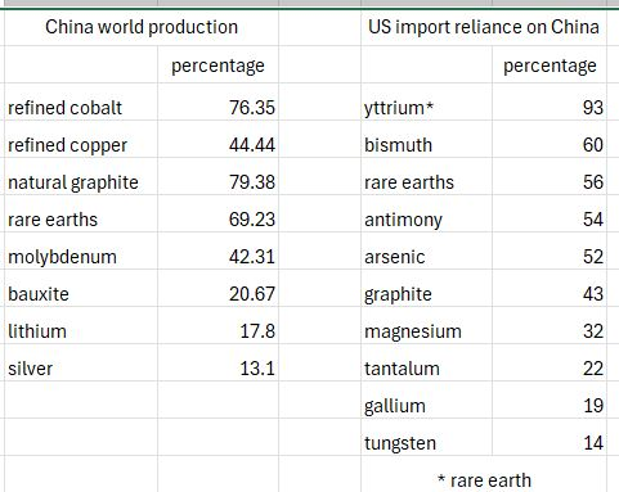
China’s rise as the world’s largest ore processor, mineral refiner and production hub took about three to four decades and is the result of a consistent industrial policy to develop national capacity.
These minerals are used in the manufacture of microchips, mobile phones, computers, consumer electronics, wind turbines, solar panels, batteries, transmission cables, precision-guided munitions, jet engines, and missile propulsion systems, among others.
Among these minerals are rare earths which are a group of 17 chemically similar metallic elements that are essential for modern electronics, green technology, and defense systems.
Pax Silica’s pioneering project, an industrial hub, is set to open in the Philippines which, as a new member this year, agreed to lease around 1,620 hectares of land for 99 years to host high-tech industries and supporting businesses, functioning as a supply chain hub for AI technology. This partnership will not only exploit the country’s resources but will also shift costs onto the host country and further reinforce the Philippines’ role in serving the US’s war games. [iii]
Pax Silica is a major facet of the AI Race between the US and China which is frequently framed as a zero-sum game, but the Chinese approach to AI would offer profound benefits to the Global South. While Western tech giants guard proprietary algorithms and high-income nations dominate global data centre infrastructure, billions of people in developing countries remain priced out. US export controls and extraterritorial laws like the 2018 CLOUD Act further reinforce this digital extraction, forcing nations to rely on expensive, closed systems.
Conversely, China champions a radically different model focused on affordability, open-source accessibility, and local sovereignty. Breakthroughs like DeepSeek and Kimi demonstrate that world-class reasoning models can be developed at a fraction of Western costs. Because Chinese models are predominantly open-weight, developing nations can download, self-host, and fine-tune them using local data and languages. This empowers countries to own their digital infrastructure rather than merely rent it, facilitating practical applications from agricultural AI in Cambodia to flood-prediction systems in Pakistan.
Furthermore, while Western nations construct exclusive clubs like the G7’s Hiroshima AI Process, excluding the majority of the world, China promotes inclusive multilateral governance. Through initiatives like the World Artificial Intelligence Cooperation Organisation and targeted training programs, Beijing advocates for equal rule-making participation and technical assistance.
Ultimately, while the US approach relies on walled-garden monopolies and digital dependence, the Chinese model builds bridges. By advancing open, affordable, and self-hostable technology, benefits will extend far beyond Beijing, empowering the Global South to become masters of their own digital future.[iv]
End Note
The Filipino people have courageously striven for centuries to achieve independence and liberation from hunger, disease, poverty and oppression. As the US uses its military pre-eminence to assert its global hegemony and defeat the rising multipolar strivings of the global majority, ASEAN countries are being coerced into US dominated Supply Chain and AI Ecosystems designed to isolate China. The resulting chaos from Washington’s expeditionary wars is creating schisms and dilemmas among pro-US elites which throw up opportunities for progressive social forces. Now more than ever, it is imperative that the global majority for peace and social progress prevails.
Readers may find these related articles, reviews and books of interest:
- Review of useful 2017 book The US vs China: Asia’s New Cold War? by Jude Woodward. This book can be bought at the Manchester University Press: The US vs China and is appraised on Goodreads: US vs China
- Briefing: The US and NATO Militarise Northeast Asia
- Hands off Asia! A People’s Call for Sovereignty and Solidarity on the conference which took place in Colombo from 16-18 July 2026.
Mike Martin is a member of Scottish CND’s trade union network.
Notes
[i] Bourgeois democratic tasks are the historical, political, and social objectives required to transition a society from feudalism or autocracy to a modern capitalist nation-state.
In Marxist and historical theory, these tasks are typically achieved through a bourgeois-democratic revolution such as the French or US Revolutions. They clear away pre-capitalist obstacles to establish the foundation for industrial and economic development.
Key Bourgeois Democratic Tasks:
- Abolishing Feudalism: Eliminating serfdom, manorial obligations, and bonded labor to free the peasantry.
- The Agrarian Question: Redistributing land from feudal landlords and the nobility to the peasantry, creating a market of independent small landowners or free wage labourers.
- Creating a Nation-State: Uniting fragmented principalities or territories into a centralised, cohesive sovereign nation with unified laws, borders, and taxation.
- Establishing Popular Sovereignty and Legal Equality: Replacing absolute monarchy or autocracy with a constitutional government, a democratic republic, or a representative parliament.
- Freeing Economic Forces: Dismantling trade guilds, internal tariffs, and mercantilist restrictions to establish free wage labor and private property.
- Securing Basic Civil Liberties: Guaranteeing formal legal rights, freedom of speech, assembly, and a legal system favorable to commercial contracts and capitalist enterprise.
[ii] This article from July 2026 by Lucio Blanco Pitlo III, Member of Board of Directors of the Philippine Association for Chinese Studies, focuses on the rise of renewable energy and modern aquaculture and how these may mitigate geopolitical tensions in the SCS: Integrating New Energy and Aquaculture: Practical Cooperation in the South China Sea.
[iii] Readers seeking a more detailed exposition of how Pax Silica will impact the Philippines, and its people may find this recent article and webinar from World BEYOND War of interest:
- Pax Silica: The Philippines’ Role in Propping up US Militarism and War
- Webinar: Pax Silica and the Philippines
These articles may also be of interest:
[iv] See article from August 2026 by Zhou Xiaoming, former Deputy Permanent Representative of China’s Mission to the UN Office in Geneva, who lays out the contrasting approaches to AI models from a partisan view point: If China Wins AI Race, Global South Wins Too