No Image

Some friendly positions on Cuba’s economic policy changes

20th September 2010 Socialist Action 0

By Brian George


Photo: Fredo_photo.

That the Financial Times and Wall Street Journal should wishfully, and inaccurately, hope Cuba’s recent economic policy changes represent an embrace of capitalism is not surprising. But in addition to this hostile analysis there has also been comment on these new economic policies that comes from friends of Cuba. As it comes from friends, the following comments are also meant strictly in that light of friendly discussion.

No Image

Turkish referendum – Victory for the AKP

20th September 2010 Socialist Action 0

By Juliet Altan

Recep Tayyip Erdogan, Shimon Peres - World Economic Forum Annual Meeting Davos 2009
Photo: World Economic Forum

Prime Minister Erdogan of Turkey attacks Israeli President Peres over Israel’s assault on Gaza at the World Economic Forum, January 2009.

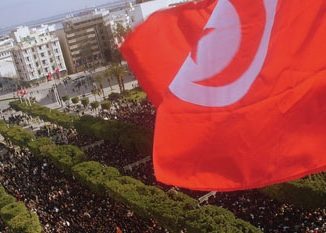
On Sunday 12 September 2010, the 30th anniversary of the bloody military coup in 1980, Turkey voted to accept constitutional amendments that have widely been viewed as moving the country away from the grip of the army.

The turnout was 73.71%, of which almost 58% approved the reform package, whilst just over 42% rejected it. There was a high abstention rate of almost 27%, mainly as a result of the call by the main Kurdish party BDP for a boycott of the referendum.

Since the election of the AKP (Justice and Development Party) government in 2002, and its re-election on a strong vote in 2007, there has been a power struggle between the army and the government in Turkey. There were several attempts, some covert and some very overt, to destabilise the government over the last few years.

No Image

Analyses of the economic policy changes in Cuba

20th September 2010 Socialist Action 0

By Brian George

i'm away for a while
Photo: consumerfriendly

A great deal of media publicity has been given to the news that Cuba is to reduce state sector employment by half a million and transfer these workers to the non-state, including private, sectors. The eventual aim is to transfer about one million of Cuba’s state workers to the non-state sector.

No Image

The Israeli-Palestinian Authority talks

20th September 2010 Socialist Action 0

 By Andrew Williams

Freedom For Palestine

Photo: Walt Jabsco

The direct negotiations between Israel and the Palestinian Authority (PA) that began in early September will go nowhere. Presented by the US as negotiations to create a Palestinian state, in fact the objectives of the US and other participants are not this at all. For the US and Israel the current framework of talks allows them to set an agenda that reinforces the occupation – as happened in the Oslo talks (1992-3) and subsequent negotiation processes – simultaneously settlements expand, more Palestinians are displaced, and Israeli missiles are fired on Gaza, whilst Palestinians are told they must not resist. The objectives are to weaken Palestinian resolve, deepen the internal Palestinian divisions, enhance the US’s image in the region and rehabilitate Israel’s battered international reputation. For Fatah’s Mahmoud Abbas, Israel’s chosen negotiating partner, it is hoped the international stage can bolster his reduced standing. Amongst Palestinians there is widespread understanding of, and consequently little support for, this framework.

No Image

The second round of the regional elections in France

16th April 2010 Socialist Action 0

By Marie Dupont

The second round of the French regional elections confirmed the defeat of the right wing parties. Indeed it was a historic scale of defeat. With 35 per cent the right received its lowest share of the vote since 1958. The left received its highest share, 54 per cent, in the same fifty two year period with the sole exception of the presidential elections in 1988. The left won 21 regions and the right only one – Alsace.

But the analysis of the results is more complex than that of a simple shift of votes from right to left.

No Image

Guns, not butter for Greece

31st March 2010 Socialist Action 0

By Nicky Dempsey

The leading countries of the European Union, led by France and Germany have insisted that the Greek government must respond to the financial crisis by a series of ferocious attacks on working class living standards. Job losses have mounted rapidly as pay has been cut, welfare and pension entitlements slashed and the retirement age suddenly increased. Yet one area of spending is exempt from this otherwise absolute requirement to reduce government spending, the military budget.

In what the Reuters news agency describes as “a bizarre twist to the Greek debt crisis, France and Germany are pressing Greece to buy their gunboats and warplanes, even as they urge it to cut public spending and curb the deficit.” France is looking to sell frigates, helicopters and fighter aircraft for €3.5bn while Germany is looking for back payments of €520mn plus €300mn for a submarine which failed sea-worthiness tests. It is reported that the deficit negotiations were used to strong-arm the Greek government into making the purchases.