
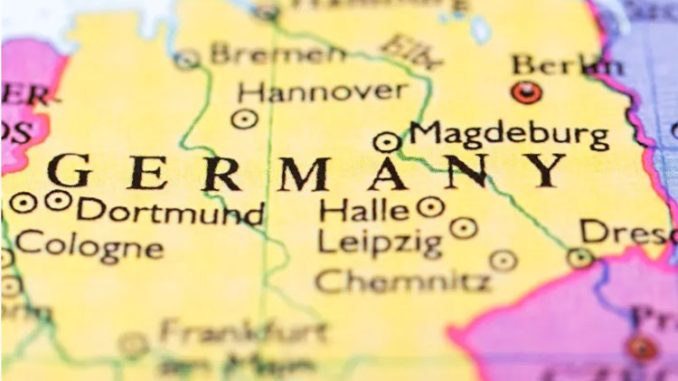
After the election in Sachsen-Anhalt
By Paul Scarrott
After the regional state elections in Sachsen-Anhalt, the AfD is on the verge of possibly forming the first far-right regional government in Germany since 1945.
Across Europe, far-right, racist, anti-working-class political parties are on the march, boosted by powerful international political and financial backing from Trump, Musk, and other wealthy reactionaries. In Italy, Meloni is in government and in France, Le Pen leads the polls for next year’s presidential election.
Understanding why the far right is growing is a critical first step to creating a strategy to defeat it.
Whilst each country has some unique features to explain its own rise of the far right, there are some common causes, notably racism, austerity and war.
The most important is the exploitation and the legitimisation of racism by mainstream parties and the bourgeois media.
An unholy alliance of mainstream parties and the far right has pushed variations of the myth that immigrants rather than government policies are to blame for deindustrialisation, unemployment, poverty and the underfunding of the welfare state. Unfortunately, sections of the labour movement and the left are making concessions to those attacks on the unity of the working class. Some argue that the far right is expressing ‘legitimate concerns’. They propose focusing on economic/living standards issues and downplay the racist scapegoating central to every far-right programme.
Racism is being whipped up by the ruling class across Europe to divide and weaken the resistance of the working class to austerity and war. Wealth is being moved from labour to capital, and the social gains embodied in the welfare state after World War Two are being eroded.
Support for US-led Western wars of aggression in West Asia and Africa, in particular, has gone hand in hand with dehumanising and silencing both the victims and the resistance to those wars, including refugees from warzones. Islamophobia has gone mainstream. It has been opportunistically exploited by the far-right in its bid for rehabilitation and respectability, taking advantage of the fading memory of its crimes against humanity in the 1930s and 1940s.
Europe’s subordination to the USA under Trump, and previously Biden, has also come with a heavy price – inflation, higher energy prices and a huge surge in wasteful military spending caused by submitting to Trump’s demand to fund the US proxy war against Russia, so he can focus his military spending on defeating China.
Where the left fails to consistently oppose racism and subordination to Trump’s war drive, it is undermining its ability to lead the discontent across Europe. La France Insoumise and the Belgian Workers Party are generally not making these mistakes, hence they are advancing. Far too often, the fakery of the far right’s claim to be on the side of the working class is not being challenged. Even worse, liberals and sections of the left give it plausibility by endorsing reactionary, divisive false claims that it is the so-called ‘white-working-class’ that is the most oppressed.
Sachsen-Anhalt
The recent election in Sachsen-Anhalt is worth examining in some detail as both a warning and a lesson. It illustrates many of the wider trends outlined earlier.
The combined vote of the CDU and the AfD in the region went from 57.9% in 2021 to 61% in 2026. The increase in the AfD vote from 20.8% to 43.8% was almost entirely at the expense of the CDU.
Post-election polling suggests that the AfD benefited from an increased turnout this year: 77.8% compared to the 2021 figure of 60.3%. The increase was higher in the countryside than the urban areas.
The AfD’s vote share was smaller in urban areas where migrants mainly live. The party came top in every rural district where there are very few migrants. Die Linke won three directly elected seats in the cities of Halle and Magdeburg.
Sachsen-Anhalt continues to be a victim of the disastrous reunification after 1990 that devastated the economy of eastern Germany. The state has both the lowest GDP per capita and the lowest level of immigration in Germany. The unemployment rate in August was 8.2% compared to 6.5% nationally. Many professions, such as construction and hospitality, have acute labour shortages. 18.55% of all practising physicians in Sachsen-Anhalt are from abroad.
It has lost a fifth of its population since 1990. Its birth rate is well below replacement rates at one-third of the 1990 level. Young people, particularly young women, are leaving the state in damaging numbers.
According to a study by the Institute for Economic Research (IW), without migration, the number of working-age people in Sachsen-Anhalt is projected to shrink by 13% by 2035, with the state already having the lowest proportion of working-age population among all German federal states at just 62.3%
Racism and the AfD
The AfD has won on the back of racialising the social and economic problems of the region – promoting the myth that migrants, foreigners and Black people are the cause of reduced living standards. Opinion polls suggest it is having similar success across Germany. The Forsa survey, 1-7 September, has the AfD at 45% in eastern Germany, excluding Berlin, and at 28% nationwide.
In Sachsen-Anhalt, the AfD successfully recruited large numbers of previous CDU voters. But this should not be a great surprise. CDU leader, Friedrich Merz, was the first major German politician to break the so-called firewall against the far right since World War Two. In January 2025, he used AfD votes to pass a non-binding anti-immigration motion in the Bundestag. Immediately following the Sachsen-Anhalt result, Merz announced plans to win back support from AfD voters by tightening citizenship laws, banning dual citizenship and imposing tougher language requirements. His subsequent attack, after the state election, on the AfD policy of remigration as ethnic cleansing, whilst welcome, is undermined by his policies.
In April 2025, the SPD and CDU/CSU finalised a coalition agreement that changed German asylum policy. It proposed turning back asylum seekers at Germany’s borders; suspending family reunification for those with subsidiary protection status for two years; opening the door to externalisation deals, by supporting the removal of restrictions on declaring non-EU countries “safe third countries” and reforming asylum procedures by shifting the burden of proof onto claimants.
The policy was denounced by The European Council on Refugees and Exiles (ECRE) in an op-ed, “Germany’s dangerous shift to the right: The new coalition agreement is a blow to refugee protection.”
The AfD’s racism
In the AfD’s government program for Saxony-Anhalt, “Immigration and Remigration” is the most extensive single chapter, with 43 sub-points. Voting for the AfD helps advance its racist agenda.
Its co-leader, Alice Weidel, summarised the centrality of its appeal to racism after the election. “People in this country no longer want business as usual – with illegal migration, open borders, skyrocketing crime rates among foreign nationals, refused deportations, a disastrous energy policy leading to the highest energy prices in the world, and rampant deindustrialisation that is breaking the backbone of Germany.”
The party blames foreigners and Black people for the social ills of Germany and champions neo-liberal MAGA economics. If it were to come to power, it plans to expel millions of people and implement a huge economic attack on the working class by rolling back the social and economic gains made since 1945. It would also unleash a wave of discrimination and bigotry against women, the LGBTQ+ community and disabled people.
Given the political DNA of the AfD, this is not a great surprise. The AfD is a party with neo-Nazi members at senior levels. Many ordinary members are connected to neo-Nazi organisations.
The AfD was formed in 2013 as a neoliberal, Eurosceptic party with about 10,000 members. In 2015, the founding leadership was overthrown by a new leadership that decided it would prosper by whipping up racism following Angela Merkel’s bringing into Germany one million asylum seekers from the war zones of West Asia who were fleeing Western wars of aggression.
Today, the AfD has about 70,000 members. Its growth since 2015 has been built on attracting racists and neo-Nazis to its ranks.
The AfD’s hyper-neoliberal economic policies would make people poorer. The party imitates Trump’s MAGA movement. Its political roadmap in Sachsen-Anhalt was called “Vision 2026.”
It supports more power to capital through deregulation, tax cuts for corporations and high earners, along with the dismantling of social welfare. It also wants to weaken trade unions. The AfD has voted against increases to the minimum wage and supports reducing access to unemployment benefits.
Like Trump, it uses racism to divide the opposition to its programme to increase the exploitation of the entire working class. For the time being, its most pernicious attack is racist discrimination based on ethnicity and nationality against migrants and non-Germans, including EU citizens. It proposes racist exclusions from social welfare, mass deportations and restrictions on freedom of movement.
The AfD election campaign in Sachsen-Anhalt called for refugee children to be placed in segregated classes. It also wants disabled children to be taught separately from other children.
The AfD proposes to subordinate the arts and the cultural sector, including museums, theatres and galleries, to ‘German identity formation.’ The party copies MAGA-like opposition to LGBTQ+ rights and profile in education and wider society. Its anti-feminism echoes the MAGA assault on the gains made by women over many decades.
All of these policies would have to be imposed through increased authoritarianism and an escalation of racism and all forms of bigotry.
Weaknesses on the left
In Sachsen-Anhalt and across Germany, the SPD has struggled to recover from the failure of the ‘traffic light’ coalition government that it led under Chancellor Olaf Scholz. The coalition collapsed in November 2024 over how to fund a major increase in military spending.
The SPD is now the minority partner in a government led by Merz, who has declared that, “The welfare state that we have today can no longer be financed with what we produce in the economy.” The government has committed Germany to having the largest conventional army in Europe by 2039.
The SPD has declined after supporting austerity and the US war-drive in Europe and West Asia. In the 2025 general election, it was reduced to 16.4%. It is currently polling even less. It has never recovered from the Hartz reforms it implemented after 2010 that shrank the welfare state and reduced workers’ employment rights.
The share of the vote won by Die Linke in Sachsen-Anhalt went from 11.2% in 2021 to 8.6% this time. Its divisions and equivocations over German policy in the Ukraine war have undermined its ability to stand up to Merz’s prioritisation of military spending over the welfare state.
Die Linke’s 9-point programme contained serious omissions which weakened the left’s opposition to the AfD. It did not mention the growing problem of racism. Nor did it refer to the damage to living standards caused by the cost of increased military spending and the higher energy prices arising from Germany’s dependence on US gas, following the Western destruction of the Nord Stream gas pipeline.
Its post-election statement, “We are and will remain the anti-fascist bulwark,” made no mention of anti-fascism or anti-racism. It concluded, “Our mission is clear: We will fight for social and democratic rights in Saxony-Anhalt – in the state parliament and beyond. We will continue to oppose any cuts. We will further expand our work and support services on the ground. We will remain where we have always been: with the people of this state.”
Die Linke’s pre-election statement, ‘Three countries, one common plan: Together for a strong East,’ also didn’t mention military spending or racism. Its focus was, “Together for a strong East – organising hope together,” expressed more directly as “a strong social alternative for the East.’
The self-proclaimed left party, the BSW, has not ruled out a deal with the AfD. It has not learned from its decision to vote with the AfD to dissolve the Brandenburg state parliament in 2025, which cost it representation in the Bundestag in last year’s general election by a margin of 0.2%.
The party also continues to legitimise the racist framing of migration by opposing ‘uncontrolled immigration.’ It also concedes to Islamophobia in its depiction of so-called Islamists. The BSW opposes increases in military spending and Germany sending weapons to Ukraine. But its very bad positions on racism undermines its ability to contribute to the opposition to German rearmament.
AfD support for German militarism
The AfD makes much of its opposition to debt-financed military spending increases and arms to Ukraine. However, for the moment, it downplays its commitment to German rearmament and a large national arms industry.
The Rosa Luxemburg Stiftung document by Alexander Kleiss and Merle Weber, ‘Why the AfD is not a peace party.’ summarises very well how the AfD combines its support for German militarism with its racist mission. It is worth quoting at length.
“At first glance, one could currently get the impression that the AfD is a peace-policy force. It is one of the few publicly visible actors in Germany calling for a diplomatic solution to the Ukraine question…. If however, one considers the AfD’s security and foreign policy positions as a whole, the supposed peace party reveals itself to be a party of German-national militarisation…. the AfD openly demands the restoration of the military strength of the middle power Germany within a national framework as the basis of a “self-confident” foreign policy …. more money for the Bundeswehr, strengthening the national arms industry, reactivating conscription, and foreign deployments deemed to serve German interests…. Whoever demonstrates with the AfD is marching for a racist Germany that finally reconquers the military strength that does justice to its fantasies of superiority and its delusions of grandeur. So that the “significant” German “nation” as the bearer of “European civilisation” finally again has an army that lets it dream of being a world power…. The AfD does not pursue peace policy, but nationalist power politics…”
Defeating the far right
The electoral advances being made by the far right in Europe pose real threats to the lives and well-being of millions of racialised communities.
If the far right is to be stopped, opposition to racism and those racialised communities under attack must be at the heart of the resistance.
Left political parties will only win power if they fight consistently for an alternative to racism, war and austerity, and build the unity of the whole working class, in alliance with all others threatened by the far-right.
The above article was originally published here on the Rising Tide blog.